
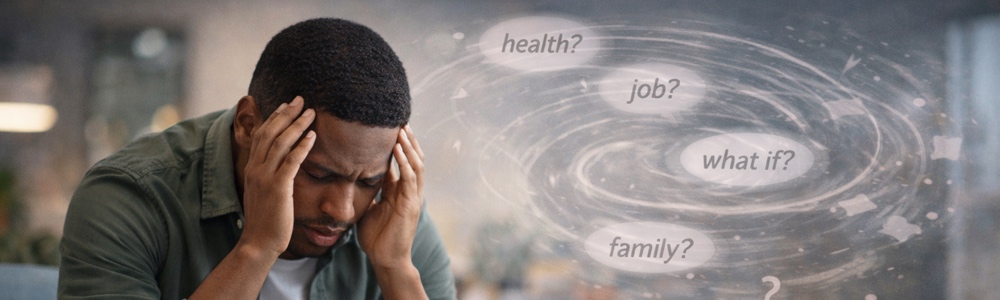
Panic disorder treatment in Roseville, California is often sought by people whose condition is at its worst in a conference room. The meeting starts, the door closes, and there is no way to leave without everyone noticing. That single fact, that leaving would be visible, is enough to start it: the heat, the pounding chest, the sense that the room is receding. Panic disorder does its most expensive work in the places where escape is socially impossible. Exposure and Response Prevention (ERP) treats it directly, and clients in our intensive outpatient program experience a 67% average reduction in symptoms.
The result is a career quietly reshaped around never being trapped anywhere.
Key Takeaways
- Panic disorder involves recurrent, unexpected panic attacks and persistent fear of having another one.
- It is particularly disabling in work settings, where leaving a meeting, a presentation, or a long call is difficult to do without being seen.
- People with panic disorder commonly avoid roles, meetings, and travel that would put them somewhere hard to exit, and they explain the avoidance as preference.
- Sitting near the door, keeping water at hand, or having an exit line ready are safety behaviors that reduce anxiety briefly and keep the disorder in place.
- Exposure and Response Prevention (ERP) treats panic disorder by facing the feared sensations and situations while dropping escape and safety behaviors.
- Our Roseville program runs three hours a day, Monday through Friday, across 16 weeks, and clients experience a 67% average symptom reduction with 92% client and parent satisfaction.
What Is Panic Disorder?
Panic disorder is a condition defined by recurrent, unexpected panic attacks and persistent fear of having another. A panic attack is a sudden surge of intense fear with physical symptoms including a pounding heart, shortness of breath, chest tightness, dizziness, sweating, trembling, and a sense of unreality.
The attacks are what people describe. The disorder is what happens between them: the anticipation, the scanning, and the reorganization of daily life around places where an attack would be manageable.
Panic disorder is a treatable condition. It is not a cardiac event and not a warning sign of physical collapse, though it does an outstanding impression of both.
Why Is Panic Disorder So Difficult at Work?
Panic disorder is difficult at work because the workplace removes the one thing the disorder relies on, which is a discreet exit. In a meeting, a presentation, a long call, or a client dinner, leaving is visible and requires explanation. The fear is therefore not only of the attack but of the attack being witnessed.
What follows is a set of accommodations that never get named as such. Taking the seat nearest the door. Declining the presentation and offering to write the deck instead. Suggesting a call rather than the site visit. Turning down the role that requires travel. Each choice is defensible, each one gets rationalized as a preference, and each one narrows the career.
The safety behaviors are subtler still and just as damaging. Water bottle within reach. Phone in hand. A prepared excuse for leaving. Scanning the room for exits before sitting down. Every one of these reduces anxiety slightly and teaches the brain that the meeting was survivable only because the precaution was in place.
Underneath all of it usually sits a specific fear: that you will visibly lose control, collapse, or do something humiliating in front of colleagues. This is what people rarely say out loud. Panic attacks do not, in fact, produce a loss of control, and the terror of it is nonetheless the engine of the entire pattern.
How Is Panic Disorder Treated?
Panic disorder is treated with Exposure and Response Prevention (ERP). Clients deliberately face both the physical sensations they fear and the situations they have been avoiding, while giving up the escape routes and safety behaviors that have made those situations tolerable.
Interoceptive exposure targets the sensations. Controlled exercises produce a racing heart, breathlessness, or dizziness on purpose, so that the client meets those feelings deliberately instead of being ambushed by them. This is where the fear of losing control starts to break, because the sensations get produced, endured, and outlived, repeatedly.
Situational exposure targets the rooms. Staying in the meeting. Sitting away from the door. Presenting. Taking the call without an exit plan. Response prevention is what makes those exposures count: no water bottle as a talisman, no rehearsed excuse, no pulse-checking under the table, no leaving when the first wave hits.
Our program delivers this at three hours a day, Monday through Friday, over 16 weeks, with an 8:1 client-to-staff ratio. Adult sessions run 12 pm to 3 pm, which means most clients continue working while doing the exposure work that gives their working life back.
Panic Disorder Treatment in Roseville, California
Our Roseville program treats panic disorder at 3001 Lava Ridge Ct, Suite 160, Roseville, CA 95661, for individuals ages 8 and older. Adult sessions run 12 pm to 3 pm and adolescent sessions run 3 pm to 6 pm, Monday through Friday.
Why Roseville
Placer County is full of professionals working in health care, technology, state government, and finance, and much of that work happens in rooms you cannot walk out of. It is also a region where careers are built on visibility: the presentation, the panel, the client meeting. Panic disorder taxes exactly that, and the tax is invisible to everyone except the person paying it. Our Roseville program serves Roseville, Citrus Heights, Rocklin, Orangevale, Fair Oaks, Folsom, Carmichael, Lincoln, North Highlands, and Foothill Farms.
What Results Can You Expect from Panic Disorder Treatment?
Clients in our program experience a 67% average reduction in anxiety symptoms, and satisfaction among clients and parents stands at 92%. In panic disorder, the fear of the sensations typically weakens first, the avoidance follows, and the attacks become both rarer and far less significant when they do occur.
Clients often report that the professional recovery is the part that surprises them. The meetings stop being a threat, the presentation gets accepted, the travel gets booked. What was being avoided was never the room. It was the possibility of being seen having an attack in it.
Myths and Facts About Panic Disorder
Myth: A panic attack could make me lose control in front of people.
Fact: Panic attacks do not cause loss of control, collapse, or bizarre behavior. They are intensely unpleasant and self-limiting, and this is something clients confirm for themselves through exposure work rather than being asked to accept on faith.
Myth: Sitting near the exit is a harmless precaution.
Fact: It is a safety behavior. It lowers anxiety in the moment and teaches the brain that the meeting was only survivable because escape was available, which is why the fear does not fade.
Myth: Everyone would notice if I had an attack.
Fact: Panic is far less visible than it feels. The internal experience is overwhelming, and observers typically notice little or nothing, which is a discovery clients make repeatedly during treatment.
Myth: I have simply chosen a role that suits me better.
Fact: When the role was chosen because the other one required rooms you cannot leave, the disorder made the choice. That is avoidance, and it is what keeps panic disorder intact.
Taking the Next Step
Panic disorder does not usually cost people their jobs. It costs them the promotions, the presentations, the travel, and the rooms they quietly stopped entering, and it collects that payment invisibly for years. Exposure and Response Prevention reverses it by putting you back in the room without the escape hatch, repeatedly, until the room is just a room. That treatment is structured, evidence-based, and available in Roseville.
Frequently Asked Questions
Can a panic attack make me pass out or lose control?
Panic attacks do not cause loss of control, and fainting is rare in panic because the body’s alarm response raises rather than lowers blood pressure. The sensations are intense and the alarm is self-limiting.
Will my colleagues be able to tell I am having a panic attack?
Usually far less than you expect. Panic feels overwhelming from the inside and is much less visible from the outside, and testing that discrepancy is part of the exposure work.
Can I keep working while attending the program?
Most adult clients do. Adult sessions run 12 pm to 3 pm, Monday through Friday, at our Roseville location, and adolescent sessions run 3 pm to 6 pm.
Does insurance cover panic disorder treatment?
95% of our clients are able to use insurance for treatment. Our admissions department verifies your benefits before you commit to anything.
Which communities does the Roseville program serve?
We serve Roseville, Citrus Heights, Rocklin, Orangevale, Fair Oaks, Folsom, Carmichael, Lincoln, North Highlands, and Foothill Farms.
Is virtual treatment available for panic disorder?
Yes. Our virtual intensive outpatient program serves adults ages 18 and up and delivers the same ERP-based treatment, on the same daily schedule, with the same outcomes as our in-person program.
How long does panic disorder treatment take?
Our intensive outpatient program runs 16 weeks, three hours a day, Monday through Friday. Many clients notice the fear of the sensations easing within the first several weeks, and the full course is what makes the gains hold.
If you have built a career around never being somewhere you cannot leave, panic disorder has been making decisions that should have been yours. Our Roseville program offers intensive, evidence-based treatment designed to put the rooms, the meetings, and the choices back within reach. Call our admissions department at 866-303-4227 to talk through what you have been avoiding, verify your insurance benefits, and find out what treatment would involve. The fear of losing control is the one thing panic disorder cannot survive being tested.