
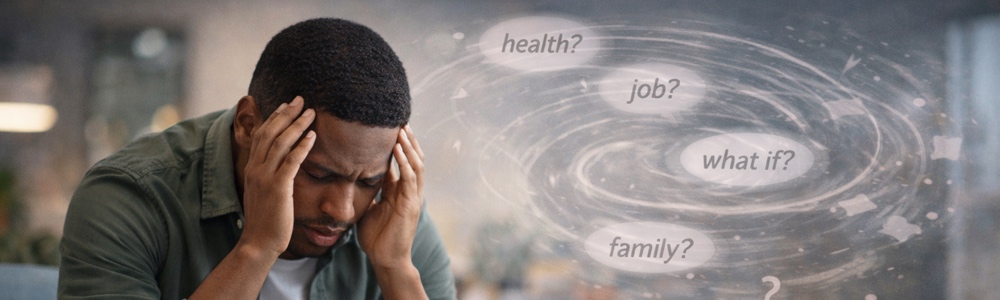
Panic disorder frequently gets its first evaluation in an emergency room. The symptoms are severe enough, and convincing enough, that people arrive certain they are having a cardiac event. The workup is clean, they are sent home, and nothing about the fear has changed. Panic disorder treatment in Mesa, Arizona takes it from there. At Anxiety Centers, our intensive outpatient program uses Exposure and Response Prevention (ERP), the evidence-based therapy for panic, with clients achieving an average 67% reduction in symptoms.
A clean EKG answers the wrong question. The problem was never your heart.
Key Takeaways
- Panic disorder involves recurring panic attacks plus persistent fear of the next one and behavior changes intended to prevent it.
- Panic attacks are a common reason for emergency room visits, because the symptoms closely mimic a cardiac event and feel like a medical emergency.
- Nocturnal panic attacks, which wake people from sleep, are common and often the most frightening presentation, and they are not dangerous.
- Exposure and Response Prevention (ERP) treats panic disorder by deliberately producing the feared sensations until they lose their meaning as signals of danger.
- Our Mesa, Arizona program treats clients ages 8 and older across the East Valley and greater Phoenix area.
- Clients achieve an average 67% reduction in symptoms, and 92% of clients and parents report satisfaction with their care.
Panic Disorder: What It Is and What It Is Not
Panic disorder is a condition in which unexpected panic attacks recur and the person develops ongoing fear of having another, along with behavior changes designed to prevent one. It is not a heart condition, a neurological condition, or a sign that a person is losing their grip on reality, though it convincingly impersonates all three.
A panic attack is a surge of intense fear that peaks within minutes, accompanied by symptoms including a pounding heart, chest tightness or pain, shortness of breath, dizziness, trembling, sweating, numbness or tingling, nausea, and a sense of unreality or detachment.
What distinguishes the disorder from an isolated attack is the aftermath. The person begins scanning their body for early warning signs, and begins reorganizing their life to avoid situations where an attack might occur. That vigilance and that avoidance are the condition, and they are what treatment targets.
Why Panic Attacks Send People to the Emergency Room
Panic attacks send people to emergency rooms because the symptoms closely resemble a cardiac event, and because they arrive without warning in someone who has no reason to suspect anxiety. Chest pain, racing heart, shortness of breath, and a crushing sense of doom is a reasonable list of reasons to seek emergency care.
Going is not a mistake. Chest pain deserves evaluation, and any responsible clinician would say the same. The problem is what happens afterward. The workup is negative, the person is told it was anxiety, and they leave with a clean bill of health and an entirely intact fear.
Many people cycle through this repeatedly, sometimes for years, accumulating normal test results while the panic continues unchanged. They begin to suspect they are wasting everyone’s time, or that something is being missed. Neither is true. What is happening is that a medical evaluation was performed for a problem that is not medical, which no amount of testing will resolve.
Panic disorder needs treatment aimed at the fear of the sensations, and that treatment exists and works.
What Is Nocturnal Panic?
Nocturnal panic is a panic attack that begins during sleep and wakes the person, typically in a state of full-blown fear with a racing heart and difficulty breathing. It is common in panic disorder and frequently the most terrifying presentation, because there is no trigger to point at and no warning at all.
These attacks are not nightmares. The person is not waking from a bad dream. The body’s threat response has activated during sleep, usually in the earlier stages of the night, and they surface directly into the physical experience of panic with no narrative to explain it.
The consequences ripple outward. People start fearing sleep itself. They stay up later, sleep more lightly, and monitor their body as they drift off, which is precisely the kind of vigilance that makes an attack more likely. A sleep problem gets layered onto the panic problem.
Nocturnal panic responds to the same treatment as daytime panic, because the mechanism is identical: fear of the sensations, maintained by avoidance and safety behaviors.
Treating Panic Disorder with Exposure and Response Prevention
Panic disorder is treated with Exposure and Response Prevention (ERP), in which clients deliberately bring on the physical sensations they fear and re-enter the situations they have been avoiding, while resisting escape and safety behaviors. Through repetition, the sensations stop signaling danger.
Interoceptive exposure is the defining technique. Clients intentionally produce the sensations that frighten them, breathing rapidly to create lightheadedness, spinning to induce dizziness, or raising their heart rate through exertion, and then do nothing in response. No checking. No calming down. No escape. The sensation is simply allowed to exist until it fades, which it always does.
Situational exposure runs in parallel, returning clients to the stores, freeways, restaurants, and rooms that have been ruled out.
Response prevention removes the props: no early exits, no pulse-checking, no reassurance calls, no safety person, no seat by the door. Those behaviors feel like the reason survival happened. Treatment demonstrates that they never were.
Panic Disorder Treatment in Mesa, Arizona
Panic disorder treatment at Anxiety Centers in Mesa, Arizona is delivered through an intensive outpatient program that runs three hours per day, Monday through Friday, over 16 weeks. Clients ages 8 and older receive individual therapy, supervised exposure practice including interoceptive work, and skills groups at an 8:1 client-to-staff ratio.
Interoceptive exposure in particular is very difficult to attempt alone. Deliberately triggering the exact sensations that terrify you requires clinical support the first several times, and doing it five days a week with staff present is fundamentally different from receiving the instructions in a weekly session and being sent home to try.
Why Mesa
Our Mesa, Arizona program at 1801 S Ext Rd serves clients from Mesa, Tempe, Chandler, Gilbert, Scottsdale, Apache Junction, and across the Phoenix area.
Two features of life in the Valley interact badly with panic disorder. The first is heat. Elevated body temperature, sweating, a faster heart rate, and lightheadedness are ordinary physiological responses to an Arizona summer, and they are also the precise sensations panic attaches to. People begin avoiding the outdoors, then avoiding leaving air conditioning at all, and the map shrinks. The second is distance. The Valley is a driving metro, and panic attacks behind the wheel on the 101 or the 60 lead people to quietly stop using freeways, adding hours to their week and cutting them off from parts of their own city. Exposure work in these cases needs to happen on the actual roads and in the actual conditions clients live with.
Panic Disorder Myths and Facts
Myth: A negative medical workup means nothing is wrong.
Fact: A negative workup means nothing is wrong medically. Panic disorder is real, diagnosable, and treatable, and being told it is anxiety is the beginning of the answer rather than a dismissal.
Myth: Nocturnal panic attacks mean something is wrong with your heart or breathing while you sleep.
Fact: Nocturnal panic is a panic attack that begins in sleep. It is not dangerous, and it responds to the same treatment as daytime panic. It should be evaluated medically once, and once is enough.
Myth: Panic attacks happen because you are not managing stress well.
Fact: Panic disorder is not a stress management failure. It develops when the body’s alarm system misfires and the person becomes afraid of the alarm itself, and it persists through avoidance rather than through stress.
Myth: If you have had panic for years, it is now part of who you are.
Fact: Duration does not reduce treatability. Panic disorder that has persisted for a decade is maintained by the same fear-and-avoidance cycle as one that began last month.
What Results Can You Expect from Panic Disorder Treatment?
Clients in our intensive outpatient program achieve an average 67% reduction in symptoms, and 92% of clients and parents report satisfaction with their care. These outcomes are supported by peer-reviewed effectiveness research on this program.
For panic disorder, the visible result is a map that expands. Freeways, stores, and public places come back into use. The constant monitoring of heart rate and breathing stops consuming attention. Sleep, for those with nocturnal panic, stops being something to dread.
Occasional attacks may still occur, and that is not failure. The difference is that they no longer mean anything, and an attack you are not afraid of cannot organize your life around itself.
Taking the Next Step
If you have been through the emergency room, the cardiology referral, and the clean results, and you are still afraid, that is not because something was missed. It is because the evaluation was aimed at your heart and the problem is in your alarm system. That is genuinely good news, even though it does not feel like it, because the alarm system is treatable and the treatment is well established. What it requires is the willingness to stop running from the sensations and to let your body prove, repeatedly and on its own terms, that they were never the emergency they claimed to be.
Frequently Asked Questions
I went to the emergency room and they said it was anxiety. What now?
That is a diagnosis, not a dismissal. Panic disorder is a treatable condition, and the treatment is specific: Exposure and Response Prevention, which targets the fear of the sensations rather than the sensations themselves. Our admissions department can walk you through what that involves.
What causes panic attacks during sleep?
Nocturnal panic occurs when the body’s threat response activates during sleep, waking the person into full panic with no trigger and no dream to explain it. It is common, it is not dangerous, and it responds to the same treatment as daytime panic.
Do you treat panic disorder in Mesa, Arizona?
Yes. Our program at 1801 S Ext Rd in Mesa, Arizona treats panic disorder through our intensive outpatient program, serving Tempe, Chandler, Gilbert, Scottsdale, and the greater Phoenix area.
Can heat trigger panic attacks?
Heat produces sweating, an elevated heart rate, and lightheadedness, which are the same sensations panic attaches to. In Arizona this is a common trigger, and it frequently leads people to avoid being outdoors. Exposure work addresses this directly.
Will insurance cover panic disorder treatment?
95% of our clients are able to use insurance for their treatment. Our admissions department verifies your benefits before you begin so you know what your specific plan covers.
Is virtual treatment an option?
Yes, for clients ages 18 and up. Our virtual intensive outpatient program delivers the same ERP-based treatment, including interoceptive exposure work, as our in-person program.
How long does treatment take?
Plan to dedicate 16 weeks of your life to this. The program runs three hours per day, Monday through Friday, with adult sessions from 12 pm to 3 pm and adolescent sessions from 3 pm to 6 pm.
If panic has been sending you to emergency rooms, keeping you off freeways, or waking you at night in Mesa or anywhere across the East Valley, there is treatment that addresses the actual problem. Call our admissions department at 866-303-4227 to talk about panic disorder treatment, verify your insurance, and find out what starting would look like.