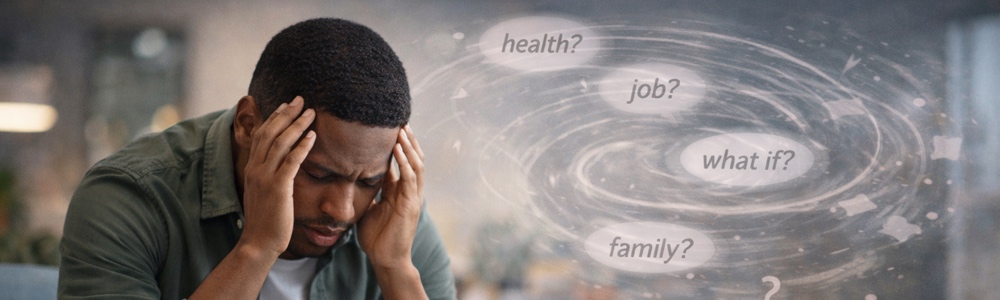

With social anxiety, the event itself is often the shortest part. Hours of dread come first, and then hours of replaying every word afterward, cataloguing what you said wrong and what people must have thought. Social anxiety treatment in Mesa, Arizona addresses all three phases, not just the moment in the room. At Anxiety Centers, our intensive outpatient program uses Exposure and Response Prevention (ERP), the evidence-based therapy for social anxiety, with clients achieving an average 67% reduction in symptoms.
Ten minutes of conversation. Two days of aftermath. That ratio is the condition.
Key Takeaways
- Social anxiety disorder is an intense fear of being judged or negatively evaluated, which drives avoidance of ordinary social and performance situations.
- The suffering is not confined to the event itself: anticipatory dread beforehand and rumination afterward often consume far more time than the interaction did.
- Post-event rumination reliably distorts memory, convincing people that interactions went badly when they did not.
- Exposure and Response Prevention (ERP) treats social anxiety by entering feared situations without safety behaviors and by cutting off the rumination that follows.
- Our Mesa, Arizona program serves clients ages 8 and older across the East Valley, including Tempe, Chandler, and Gilbert.
- Clients achieve an average 67% reduction in symptoms, and 95% are able to use insurance for their care.
Social Anxiety Disorder: More Than Nervousness
Social anxiety disorder is a persistent, intense fear of situations where a person might be observed or evaluated, severe enough that those situations are avoided or endured with significant distress. The underlying fear is that some inadequacy will be exposed and judged.
It covers far more ground than public speaking. Answering a question in class. Making a phone call. Speaking to a cashier. Eating in front of people. Entering a room where conversations are already in progress. Disagreeing with someone. Being introduced. Any situation with an audience, and an audience of one qualifies.
People with social anxiety are frequently described as quiet or reserved, which is a description of the symptom mistaken for a description of the person. Many of them want connection intensely and are prevented from it by fear, which is a different and much more painful thing than preferring solitude.
Why the Worst Part Happens Before and After
Social anxiety extends well beyond the feared event through two mechanisms: anticipatory anxiety in the days beforehand and post-event rumination in the days afterward. Together they routinely consume more time and cause more suffering than the interaction itself.
Anticipatory anxiety begins the moment an event enters the calendar. The mind rehearses, predicts, and catastrophizes. People spend a week dreading a twenty-minute meeting, running scenarios in which they say the wrong thing. Many cancel to escape the dread, and the relief that follows cancellation is exactly what guarantees the next event will be dreaded even more.
Post-event rumination is the more insidious half. After a social interaction, the person conducts an exhaustive review: what they said, how it landed, what expression someone made, whether a pause was too long. This review is not neutral. It systematically searches for evidence of failure, finds it, and encodes the interaction as a disaster regardless of what actually happened. The memory that gets stored is not the event. It is the anxious reconstruction of the event.
Over years, this builds a false archive. The person genuinely believes they have a long history of humiliating social failures, when what they actually have is a long history of ruminating.
How Social Anxiety Narrows a Young Adult’s Life
Social anxiety typically emerges in adolescence or early adulthood, which is the worst possible timing, because it is the exact period when a person is building the foundations of their education, career, and relationships. Every avoidance made in that window has downstream consequences.
The classes with presentations get dropped. The major that requires group work gets changed. The club is not joined, the study group is not formed, the job requiring an interview is not applied for. None of these decisions look like symptoms of a disorder. Each looks like a preference.
Socially, the same thing happens. Invitations are declined until they stop arriving. Friendships that would have formed do not. Dating is avoided entirely. By the late twenties, the person has a materially smaller life than their abilities predicted, and no single decision along the way looked like a mistake.
This is why early treatment matters so much for this condition. Treating social anxiety at 19 prevents a decade of accumulated avoidance that will otherwise need to be undone at 29.
Treating Social Anxiety with Exposure and Response Prevention
Social anxiety is treated with Exposure and Response Prevention (ERP), in which clients deliberately enter feared social situations while dropping the safety behaviors they normally use and refusing to engage in the rumination that follows. Without those behaviors, the brain finally gets accurate information about how social interactions actually go.
Exposure is graded and specific. It might progress from asking a stranger a simple question, to speaking up in a group, to giving a presentation, to deliberately making a small mistake in public and letting it stand. That last step matters, because the deepest fear is usually not a specific event but the exposure of imperfection.
Response prevention has two targets in social anxiety. During the event, it means going in without armor: no rehearsing, no scripting, no eye-contact avoidance, no strategic silence, no phone as a shield. After the event, it means refusing to conduct the post-mortem. Clients learn to notice the pull to review the interaction and to decline it, over and over, until the pull weakens.
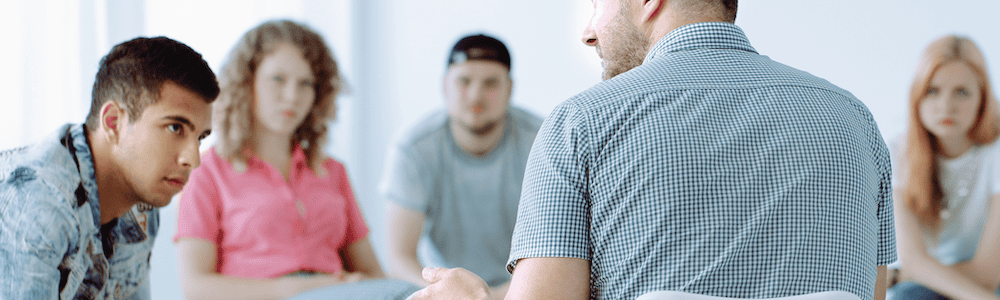
Group work is central to this. Our program’s group component means the treatment room is a live social environment where exposure happens with clinical support present, rather than being assigned as homework and attempted alone.
Social Anxiety Treatment in Mesa, Arizona
Social anxiety treatment at Anxiety Centers in Mesa, Arizona is delivered through an intensive outpatient program running three hours per day, Monday through Friday, over 16 weeks. Clients ages 8 and older receive individual therapy, group exposure practice, and skills groups at an 8:1 client-to-staff ratio.
Why Mesa
Our Mesa, Arizona program at 1801 S Ext Rd serves clients from Mesa, Tempe, Chandler, Gilbert, Scottsdale, Apache Junction, and across the Phoenix area.
The East Valley has one of the largest student populations in the country concentrated within a short drive, and social anxiety disorder most commonly first appears in exactly that age range. For a student, the condition is uniquely destructive, because higher education is built on the very things social anxiety avoids: participation, presentations, group projects, office hours, and networking. Students routinely change majors, drop classes, or leave school entirely for reasons they describe as academic and which are actually a treatable anxiety disorder. Having specialty care in Mesa rather than across the Valley means that treatment is realistically attendable alongside a class schedule.
Social Anxiety Myths and Facts
Myth: If an interaction felt like it went badly, it went badly.
Fact: Post-event rumination systematically distorts memory toward failure. People with social anxiety are unreliable narrators of their own social performance, and consistently rate interactions far more harshly than observers do.
Myth: Preparing thoroughly for social situations is just being conscientious.
Fact: Rehearsing and scripting are safety behaviors. They make the situation feel survivable and prevent the brain from learning that it would have been survivable anyway.
Myth: Replaying an interaction helps you learn and improve for next time.
Fact: Rumination produces no learning and no improvement. It generates distorted evidence of failure, deepens the fear, and makes the next situation harder. Treatment cuts it off deliberately.
Myth: You will grow out of social anxiety.
Fact: Untreated social anxiety typically persists into adulthood, and the avoidance it produces accumulates, meaning the life it shapes gets progressively narrower rather than self-correcting.
What Results Can You Expect from Social Anxiety Treatment?
Clients in our intensive outpatient program achieve an average 67% reduction in symptoms, and 92% of clients and parents report satisfaction with their care. These outcomes are supported by peer-reviewed effectiveness research on this program.
The change most clients notice first is not the event getting easier. It is the aftermath disappearing. The two days of replaying stop, and with them the false archive of humiliation stops being added to.
Progress is measured in actions. You spoke. You asked. You went. You stayed. The internal comfort follows, and it follows the behavior rather than preceding it.
What This Means for You
If you have spent years believing you are simply bad at social situations, it is worth considering that the evidence you are relying on was collected by a process specifically designed to find failure. The dread beforehand and the interrogation afterward are not accurate reporting. They are symptoms. What treatment offers is the chance to go into the room without armor, come out without conducting the post-mortem, and finally discover what actually happens in the space between, which for nearly everyone turns out to be far less catastrophic and far more ordinary than the anxiety has been insisting.
Frequently Asked Questions
Why do I replay conversations for days afterward?
That is post-event rumination, a core feature of social anxiety. It feels like useful review and functions as a search for evidence of failure, which it reliably finds. It distorts your memory of the interaction and makes the next one harder, which is why treatment targets it directly.
Do you treat social anxiety in students?
Yes, and it is a common presentation in the East Valley. Social anxiety typically emerges in adolescence or early adulthood, and untreated it drives students to drop classes, change majors, or leave school for reasons that look academic but are not.
Is your program in Mesa, Arizona?
Yes. Our program is at 1801 S Ext Rd in Mesa, Arizona, serving Tempe, Chandler, Gilbert, Scottsdale, Apache Junction, and the greater Phoenix area.
Will insurance cover social anxiety treatment?
95% of our clients are able to use insurance for their treatment. Our admissions department verifies your benefits before you begin so you know what your plan covers.
What if I get visibly anxious, blushing or shaking, when I speak?
Visible anxiety is common and often becomes a secondary fear of its own. Exposure work addresses it directly, including practice with letting the anxiety show rather than working to conceal it, which is what removes its power.
Is virtual treatment available?
Yes, for clients ages 18 and up. Our virtual intensive outpatient program delivers the same ERP-based treatment, though the in-person group work at our Mesa location offers exposure opportunities many clients with social anxiety find especially valuable.
How long does treatment take?
Plan to dedicate 16 weeks of your life to this. Sessions run three hours per day, Monday through Friday, with adult sessions from 12 pm to 3 pm and adolescent sessions from 3 pm to 6 pm.
If the dread before and the replaying after have been costing you more than the conversations themselves, treatment can end that cycle. Call our admissions department at 866-303-4227 to talk about social anxiety treatment at our Mesa, Arizona program, verify your insurance, and find out what starting would look like.